Workshop notes · fernlevel.com

Spaces people inhabit, not pictures they look at

These pages describe a small workshop format for immersive environment design: how enclosure, sightlines and movement are planned together. The notes are for practitioners who already know drawing tools and want a slower look at spatial intent.

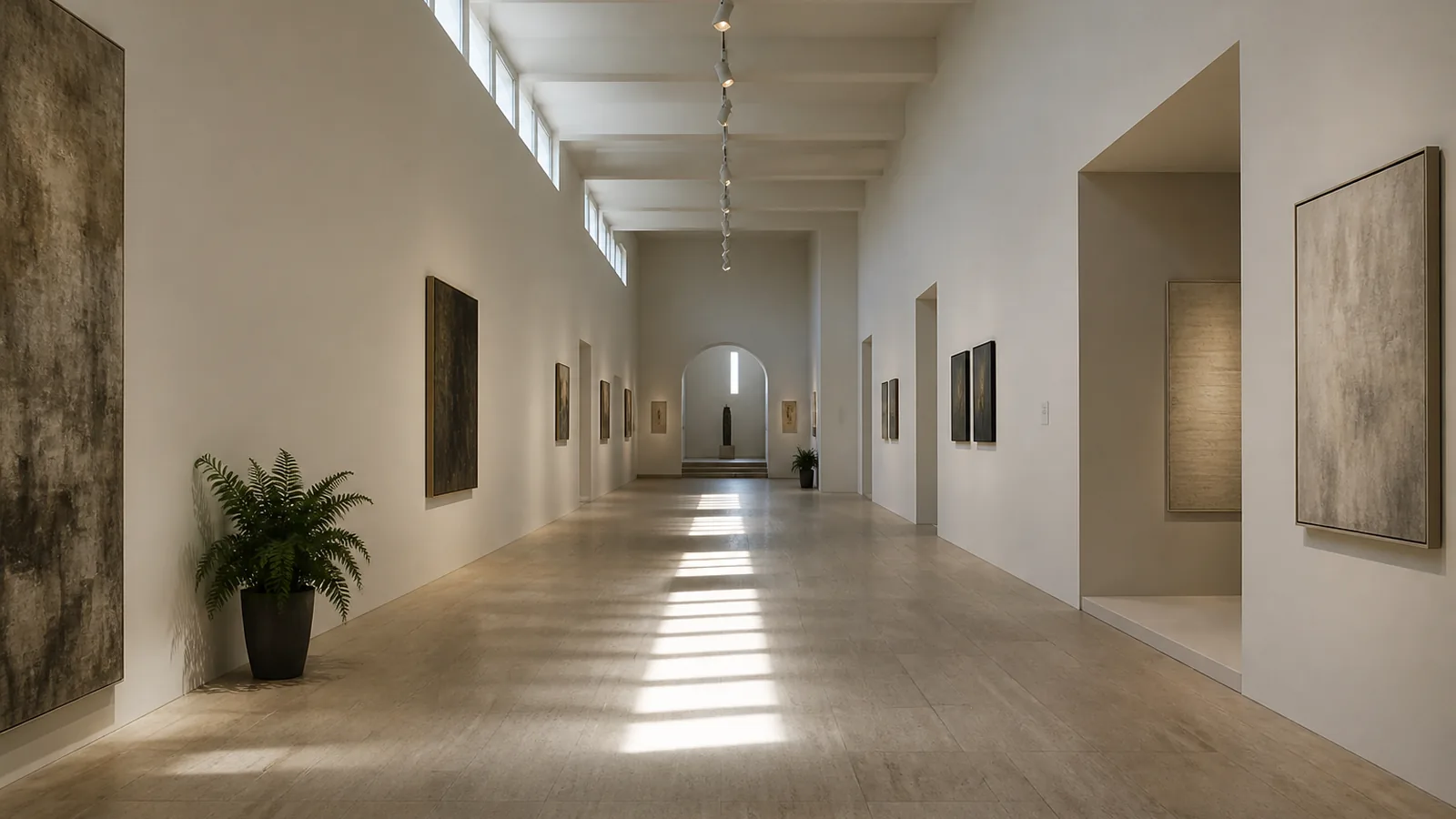
Long daylit gallery with a pale floor, tall windows and a quiet path toward a far alcove
A working room, not a render: occupant path, daylight, one alcove.

01

Three session shapes

Each shape stands on its own. They are not a ladder and they are not sold as a sequence. Choose by the problem on the desk, not by how complete the title sounds.

I

Spatial intensive

Six meetings on environments where the occupant’s position matters. Composition, scale, sightlines, and the logic of moving through a room. Assignments stay on one brief long enough to revise it.

  • Six live meetings, ninety minutes each
  • Three assignments with a written review round
  • A documented process at the end, not only a final view

Six weeks · small group

II

Interaction layer sprint

Three meetings for people who already read space and want to work on response: presence, gesture, attention. One brief. One complete walkthrough of the interactive layer.

  • Three live meetings, two hours each
  • A single focused brief
  • A walkthrough others can occupy

Three weeks · sprint

III

Group critique

One meeting for work already in motion. Bring a plan, a model, or a headset walkthrough at any stage. The useful part is the protocol: short, specific notes tied to decisions in the space.

  • One two-hour meeting
  • Up to five seats
  • Written notes after

Single meeting

Support during a cycle

When the next step is not obvious

Immersive rooms rarely have a clean answer. Reference images run out. The structure of a cycle is there for that moment: a shared brief, a review round, and time between meetings to change the work.

Questions sent between meetings get a written reply on a working-day rhythm. The pace is set so the difficult parts are not skipped.

Review rounds

Each assignment includes a short, focused pass from the other seats in the room. Comments stay on spatial flow, scale and attention — not on taste in general.

Written questions

A question posted between meetings is answered in writing. The thread is kept short so it does not turn into an open forum.

Revision checkpoints

Before a new brief starts, there is time to reopen the previous one with the last round of notes in hand.

02

Familiar starting points

These are situations people describe when they first write in. They are not reviews and they are not ratings. If one of them is recognisable, the notes on this site are aimed at that kind of work.

Screen habits in a spatial brief

Years of designing flat layouts, then a project that needs rooms, paths and where a person actually stands. The missing piece is often not software. It is a way to decide what the occupant should notice first.

Strong space, thin response

Architectural instinct is already there. The interactive layer is not: how the room answers to presence, pause, or a raised hand. Vocabulary for that layer is the gap.

A walkthrough that only looks finished

Renders are polished. Moving through the space still feels accidental. The work needed is a slower pass on sequence, not another material study.

Installation with an audience that will wander

A civic or gallery setting where people arrive from different directions. Sightlines and sound have to survive that mess, not a single camera path.

After a cycle

What is meant to remain

The point is not a certificate. It is whether the next brief is framed more clearly before drawing starts. That change is slow. These notes do not promise a career move or a specific outcome.

Three staggered white exhibition walls receding in depth with a fern at the side
Enclosure, movement, attention — stacked in one room, not treated as separate courses.
01

A process that transfers

Methods used on the workshop brief are ordinary enough to reuse: measure the path, name the first sightline, then decide what the space should withhold.

02

Work you can show as thinking

A full cycle produces a documented process — plans, notes, revisions — not only a last image. That file is yours.

03

Optional later critiques

People who finish an intensive may be invited to occasional later critique meetings. They are small and optional. They are not a community product.

04

Honest about the limit

A workshop will not guarantee a role change. It offers a structured room to do spatial work, get specific notes, and practise habits that take time.

03

Questions that arrive often

If the answer you need is not here, write using the contact page. There is no booking cart on this site.

Is this a software tutorial?

No. Tools are used only as a way to test a spatial decision. The subject is environment design: presence, path, scale and attention.

Do I need a headset?

Not for every format. Physical plans and scale models are enough for the intensive. Headsets appear when a brief truly needs a walkthrough at one-to-one scale.

Is there a public schedule or a price list?

Cycles are opened one at a time. Dates and fees, when a cycle is actually running, are sent in reply to a written enquiry. This site does not take payments.

What should I not expect?

Entertainment, public contests, or a store. Fernlevel is a set of workshop notes and a way to ask about a seat in a small session.